
Table of contents
- 5 must-have features in modern sales coaching software (with use cases from real teams)
- Conversation intelligence: turning calls into coaching gold
- Performance tracking and rep scorecards
- AI-powered feedback and real-time coaching prompts
- Role-specific coaching paths and customization
- Seamless integration with the sales stack
- Final takeaway: what great implementation looks like
5 must-have features in modern sales coaching software (with use cases from real teams)
Modern sales coaching software isn’t just a nice to have anymore, it’s a competitive edge. In fast-paced, target-driven B2B SaaS environments, consistent, scalable, and data-driven coaching can be the difference between hitting quota or missing the mark. Today’s best sales orgs are using smart platforms that combine AI, analytics, and real-time insights to upskill reps, optimize performance, and drive revenue.
Sales coaching has evolved. Traditional one-on-one coaching models, while impactful, are difficult to scale. With only 35.2% of a rep’s time spent actively selling and 73% of sales managers dedicating less than 5% of their time to coaching, the need for automation is more urgent than ever [1][2].
This shift is critical for three main reasons:
- Teams with formal coaching processes hit 91% of quota on average. This proves how regular and structured coaching contributes to improved performance across sales teams.
- Replacing an SDR costs over 200% of their salary, highlighting the financial toll of poor onboarding and coaching. When reps aren’t properly supported, attrition increases.
- Coaching 2 to 3 hours per week consistently improves performance. The data shows that time invested in coaching results in tangible ROI.
Scalable coaching platforms empower managers to deliver high-quality feedback more frequently and to more reps. These platforms make coaching repeatable, trackable, and aligned with business goals.
Conversation intelligence: turning calls into coaching gold
Top-performing teams don’t just record calls, they analyze them in depth. Conversation intelligence allows sales leaders to convert customer interactions into actionable coaching insights.
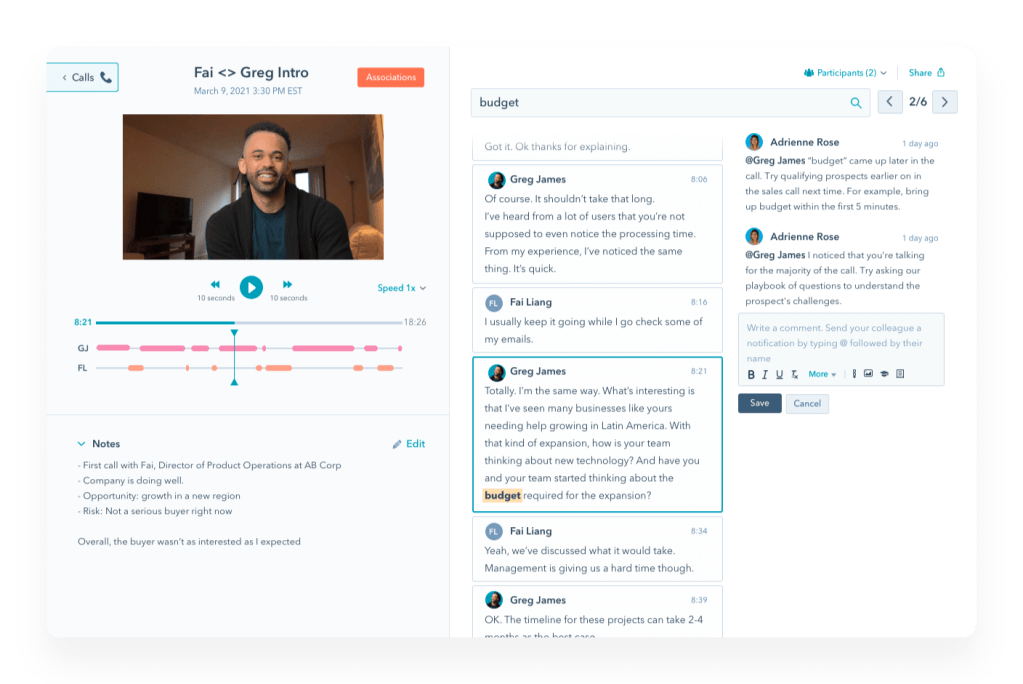
Here’s how conversation intelligence drives value:
- It provides full visibility into every customer interaction through automatic transcription and analysis. Every call, demo, and discovery session is captured and searchable, enabling managers to identify common sticking points and highlight areas for improvement.
- Keyword and topic tagging identifies critical conversation elements like pricing discussions, objections, and competitor mentions. This allows managers to filter key segments and assess the effectiveness of specific responses and messaging.
- Win-loss pattern recognition surfaces what top reps do differently. These include behaviors such as pacing, question structure, talk-to-listen ratio, and the way they handle objections or pushback.
- CRM integration helps tie conversation quality to deal outcomes, revealing how certain talk tracks, questions, or messaging approaches correlate with conversions and closed deals.
Instead of relying on anecdotal feedback, managers can coach based on real data. Claire Heskin, CRO at Ronspot, increased demo conversions by 33% using conversation intelligence to refine objection handling [3]. Leyton also achieved 97% new hire quota attainment and reduced ramp time by 15 days with structured call reviews through Allego [4].
Performance tracking and rep scorecards
Sales coaching needs context. Without a clear picture of rep performance, managers can’t personalize coaching. That’s where performance scorecards come in.

These scorecards typically cover:
- Activity data like daily calls made, meetings set, and email engagement. These leading indicators help managers understand rep effort and consistency.
- Pipeline metrics like stage progression, conversion rates, and sales velocity. These metrics allow managers to diagnose where deals stall and what behaviours influence movement through the funnel.
- Outcome metrics like revenue closed, average deal size, and customer retention rates. These are the ultimate proof of effectiveness and help managers benchmark reps against top performers.
By centralizing this information, managers can quickly spot trends, identify coaching gaps, and customize development plans for each rep. Salesloft users, for example, achieved 2.5x pipeline growth and 50% higher conversion rates by focusing coaching around specific scorecard insights [5].
AI-powered feedback and real-time coaching prompts
Sales happens in real time, and now, coaching can too. AI-powered coaching tools help reps improve while they’re on calls, not just during weekly reviews.
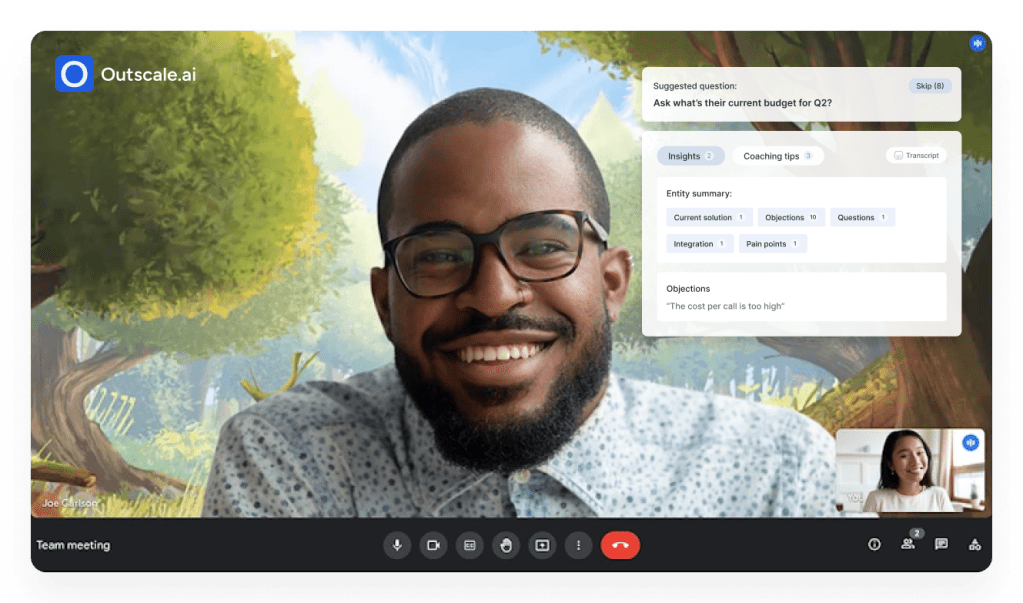
Source: https://outscale.ai/
Key AI features include:
- In-call nudges that alert reps when they speak too fast, interrupt, or miss opportunities to ask discovery questions. These micro-prompts encourage reps to adjust behaviours instantly.
- Instant feedback summaries that analyse calls for tone, engagement, speaking time, and how well objections were handled. This helps reps reflect on their performance immediately after each call.
- Personalized coaching prompts generated from recent performance data. These help managers deliver targeted advice, and reps understand where they need to improve and why.
This kind of real-time enablement helps reps self-correct and speeds up skill development. Research shows teams using AI-powered coaching see a 41% increase in win rates and 29% improvement in quota attainment [6].
Role-specific coaching paths and customization
Not every sales rep has the same responsibilities or development needs. Leading sales coaching platforms offer role-specific coaching paths that adapt to job functions and experience levels.
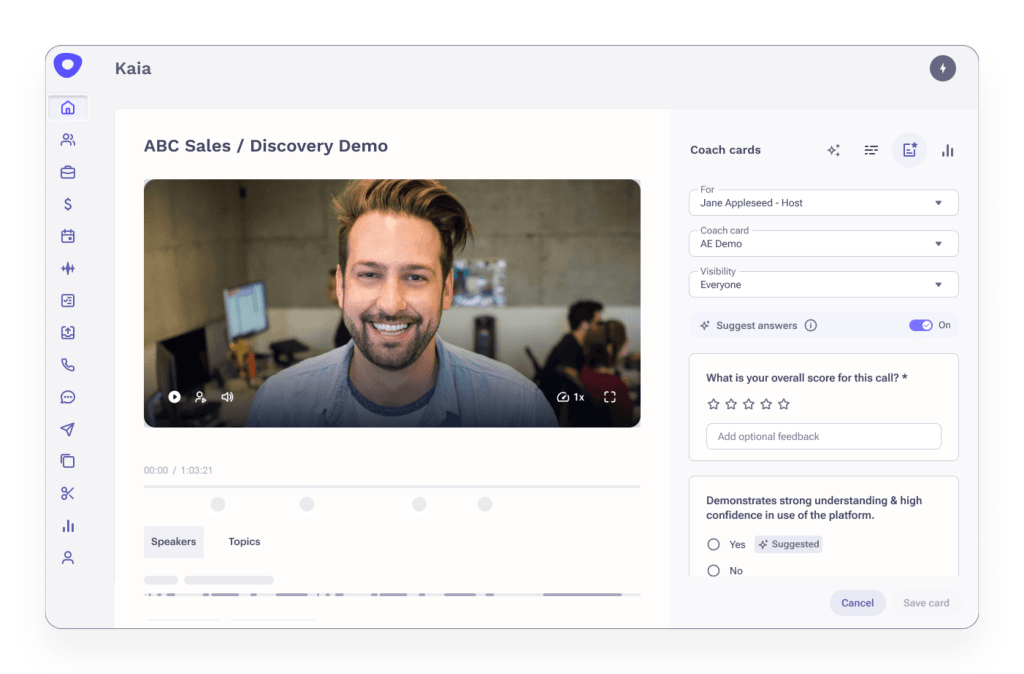
Role-based customization features:
- Dedicated scorecards for different roles such as SDRs, AEs, and CSMs. Each role has unique metrics tied to its responsibilities. SDRs may be measured on meetings booked, while AEs focus on deal progression and revenue, and CSMs track expansion and renewal rates.
- Learning journeys tailored to tenure. New reps might start with a structured onboarding curriculum focused on objection handling and product knowledge. More tenured reps receive advanced modules on deal strategy, multithreading, and upselling techniques.
- Peer benchmarking by segment or territory. This allows reps to view anonymized performance data of peers within similar markets or regions, giving them realistic standards to aim for.
By aligning coaching with roles and experience, organizations can ensure each rep is getting the guidance that’s most relevant to their success.
Seamless integration with the sales stack
Modern sales teams use dozens of tools, and coaching software must work well with them. Seamless integration ensures that coaching is based on the latest, most complete data without requiring extra manual work.
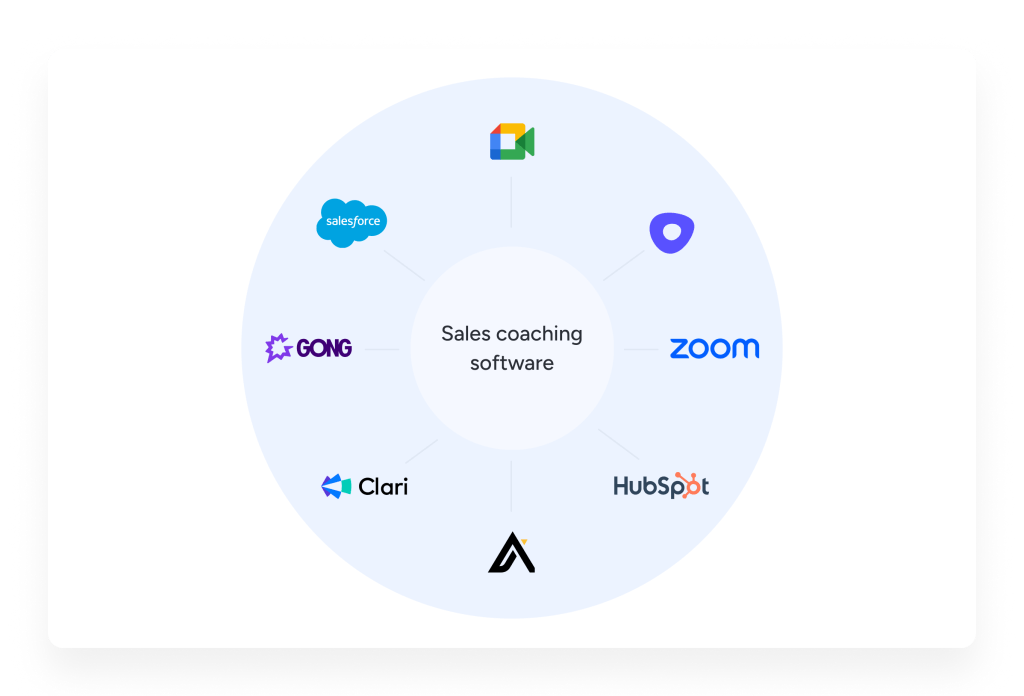
Critical integrations include:
- CRM systems like Salesforce or HubSpot, which sync contact data, deal stages, and activity logs. This helps coaching stay aligned with sales workflows and eliminates double entry.
- Call recording platforms like Gong, Chorus, or Wingman. These automatically feed call insights, transcriptions, and talk ratios into the coaching tool.
- BI and analytics platforms like Clari or Tableau, which link rep behavior to broader pipeline and forecast data. Managers can use this data to identify patterns between coaching efforts and revenue impact.
With tight integrations, reps don’t have to toggle between systems. Managers can spend less time gathering data and more time delivering impactful coaching.
Final takeaway: what great implementation looks like
Great implementation is what turns sales coaching software into a growth engine. It begins with a controlled pilot—starting small allows teams to test workflows, gather frontline feedback, and identify what needs tweaking. This phase also helps build internal champions who advocate for the tool across the org, preventing it from fading into the background.
Then, coaching KPIs must be tied directly to business goals. If faster ramp time or improved win rates are top priorities, the coaching strategy should reflect that. Measuring coaching completion alongside rep performance helps reinforce its value and secure leadership support.
And remember: managers need enablement too. Equip them with training and playbooks, and walk them through using the platform, interpreting data, and delivering impactful, personalized feedback. Confident managers are more consistent coaches.
Real-world examples:
- Brandwatch improved conversion rates by 15% after embedding structured call reviews into weekly rituals [7].
- Domo built its largest-ever pipeline by pairing coaching sessions with live deal reviews and role-play exercises [8].
- According to Forrester’s Total Economic Impact report, a Salesloft customer generated $10 million in new revenue by rolling out a structured, metrics-led coaching culture across their team [5].
Sales coaching software is not just about insights, it’s about impact. The right tools can dramatically reduce ramp time, improve rep performance, and drive consistent revenue growth.
Winning sales teams don’t just adopt software. They embed it in their workflow, align it with KPIs, and empower managers to lead with data.
If you want predictable revenue, start with predictable coaching.
Sources:
[1] https://desku.io/blog/sales-stats/
[2] https://qwilr.com/blog/sales-coaching-statistics/
[3] https://www.claap.io/blog/what-is-conversation-intelligence
[4] https://www.allego.com/case-study/international-consulting-firm-leyton-sees-97-percent-of-new-hires-hit-target-using-allego-conversation-intelligence/
[5] https://www.salesloft.com/company/newsroom/salesloft-forrester-tei-2025
[6] https://www.kornferry.com/insights/featured-topics/sales-transformation/how-ai-sales-tools-help-managers-improve-team-performance
[7] https://www.g2.com/products/sybill/reviews
[8] https://www.gong.io/case-studies/domo/
 Outscale.ai