
Table of contents
How AI coaching works: behind the scenes of an intelligent feedback loop
Sales teams today face more pressure than ever to perform at peak levels while navigating complex buying cycles and adapting to evolving customer expectations. Traditional coaching methods, while valuable, often struggle to keep pace with the scale and speed required in modern B2B sales. This is where AI-powered coaching steps in, delivering personalized, data-driven guidance at scale. In this expanded deep dive, we explore the technologies and processes that make AI coaching possible, how it analyzes conversations, and how it creates a continuous cycle of learning and improvement, with more detail, examples, and industry perspectives
Source: https://outscale.ai/
The core components of AI coaching systems
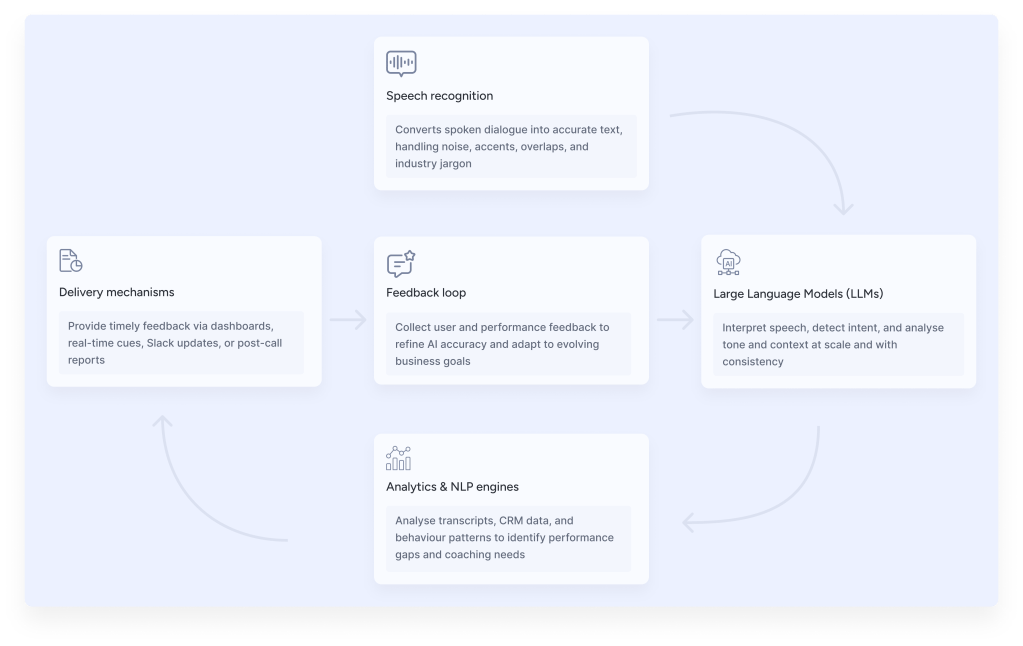
AI coaching systems operate on a foundation of interconnected technologies that work together to deliver actionable insights to sales reps and managers. Beyond the surface-level buzzwords, these systems rely on precise technical capabilities to make an impact.
1. Speech recognition models
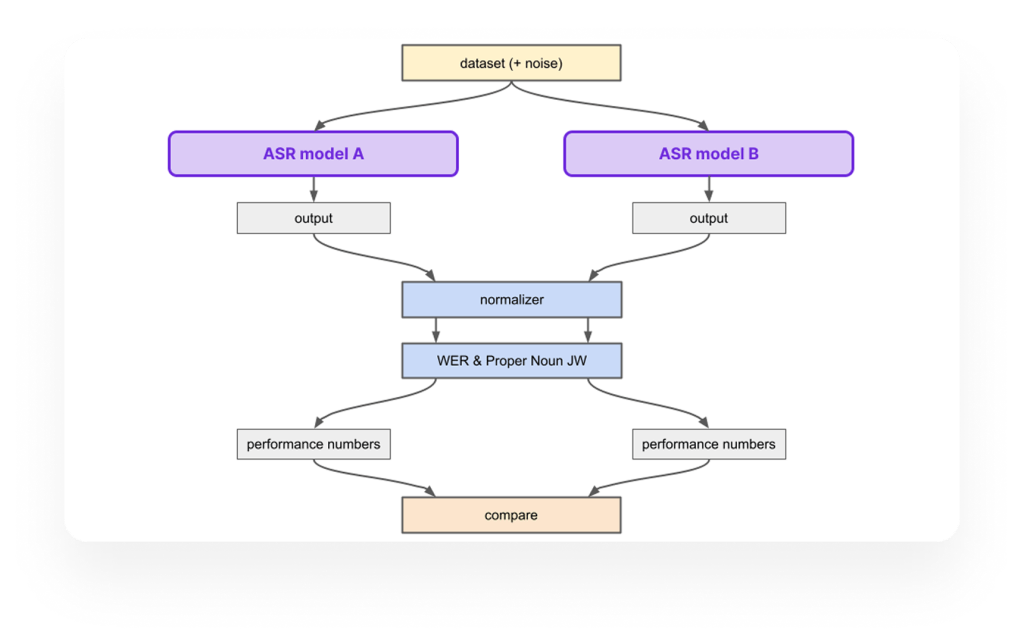
Often the first step. These models convert spoken dialogue into accurate text, even in noisy environments or with varied accents [1]. Modern models can handle interruptions, overlapping voices, multiple languages/accents and industry-specific jargon, ensuring that nothing valuable is lost during transcription.
2. Large language models (LLMs)
These advanced AI models interpret human speech, understand intent, and detect nuances in tone and context. They allow the system to analyse sales conversations much like an experienced sales manager would, but with the advantage of consistency and scale [1]. For example, LLMs can distinguish between a casual question from a prospect and a critical buying signal hidden in the same phrase.
- Fine-tuned models: In addition to general-purpose LLMs, fine-tuned models are adapted for specific industries, product categories, or coaching scenarios. These customized models leverage domain-specific vocabulary, sales methodologies, and compliance considerations, making their analysis and recommendations more accurate and relevant for the target context.
3. Analytics & NLP engines
Analytics engines process call transcripts, CRM data, and behavioral signals to detect patterns and performance gaps [1]. For instance, if a rep consistently misses opportunities to upsell during late-stage calls, the system will flag this pattern for targeted coaching.
4. Delivery mechanisms
The most impactful insights are worthless if they arrive too late or in the wrong format. AI systems deliver feedback through dashboards, real-time cues, slack updates, or post-call emails/reports, ensuring relevance, context and immediacy [2]. Some tools, like Outscale.ai, even provide live “nudge” prompts during calls.
5. Feedback loop
Gathering feedback on what’s working and what’s not working helps the AI system learn better and provide more personalized assistance over time. This feedback can come from rep performance data, coaching session outcomes, or direct user input. The role of evaluations (evals) is critical here, they measure how well the AI’s suggestions align with desired business outcomes and identify areas for algorithmic improvement, ensuring the coaching system evolves alongside the needs of the organization
According to GlobeNewswire, organizations combining AI with structured coaching processes see up to 3.3x higher quota attainment and 56% shorter sales cycles [3]. Salesforce reports that high-growth companies using AI also achieve 95% productivity boosts and 30% higher employee engagement [4].
How AI analyses conversations and behaviours
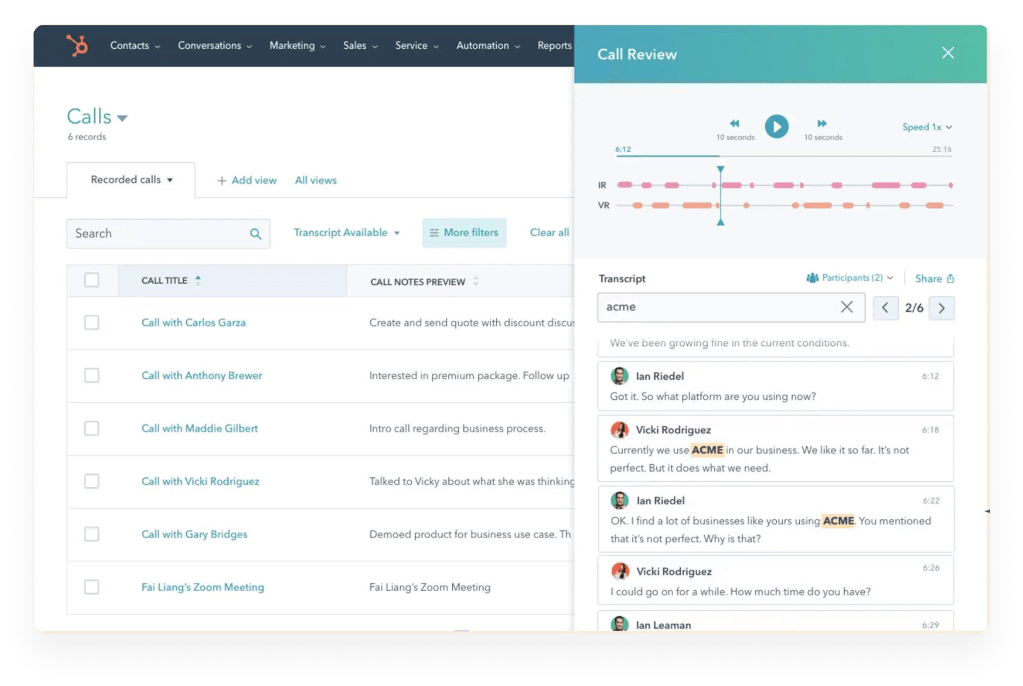
AI-powered conversation intelligence tools process 100% of sales calls, compared to the 5–10% a human manager might review [5]. This is achieved through a tightly integrated stack of core AI components: large language models, speech recognition systems, analytics engines, delivery mechanisms, and a continuous feedback loop, all working in concert to transform raw conversational data into targeted, high-value coaching interventions
Transformer-based architectures handle both speech-to-text and natural language understanding, with domain-specific fine-tuning ensuring accuracy in sales contexts. Advanced acoustic models, diarization, and noise suppression prepare clean transcripts for deep analysis, while entity recognition, contextual embeddings, and prosodic feature extraction surface buying signals, objections, and engagement trends.
Step-by-step process:
- Speech-to-text conversion: The conversation is transcribed in real time with high accuracy across accents, speaking speeds, and background noise [6]. Domain-adapted acoustic models, punctuation restoration, and diarization distinguish speakers and manage overlaps; voice activity detection (VAD) and noise suppression ensure optimal input quality.
- Keyword and entity detection: Entity recognition, contextual embeddings, and temporal markers flag competitor mentions, timeline detection, pain points, pricing discussions, objections, and buying signals [6].
- Sentiment and engagement analysis: Prosodic feature extraction and affective computing models measure tone shifts, talk-to-listen ratios, and engagement cues [6].
- AI coaching generation: Detected keywords, entities, sentiment, and engagement data are combined with CRM metadata (sales stage, deal size, historical win/loss patterns). Decision models and generative LLMs produce tailored, context-aware coaching, advising reps to adjust pacing, handle objections differently, or revisit budget talks, in real time or in structured post-call guidance.
The combined system surfaces findings through performance dashboards for skill tracking, automated call scoring for consistent evaluation, and action-oriented recommendations to close performance gaps [8][9].
- Sales stage mapping: Supervised classification models, trained on historical deal progression, map calls to deal stages and pinpoint where prospects may be stalling [6].
- CRM integration: Via API connections and webhook triggers, enriched insights, transcripts, sentiment tags, and AI-generated notes are synced directly into CRM records, cutting admin time and boosting context for reporting [6].
According to Gartner, AI-driven coaching can boost sales productivity and win rates by 15–20%, while case studies report 39% improvements in playbook adherence and 26 hours saved per month for managers [9][10]. In a BTS case study, AI improved sales playbook adherence by 39% and saved managers 26 hours per month [9].
Personalizing development at scale
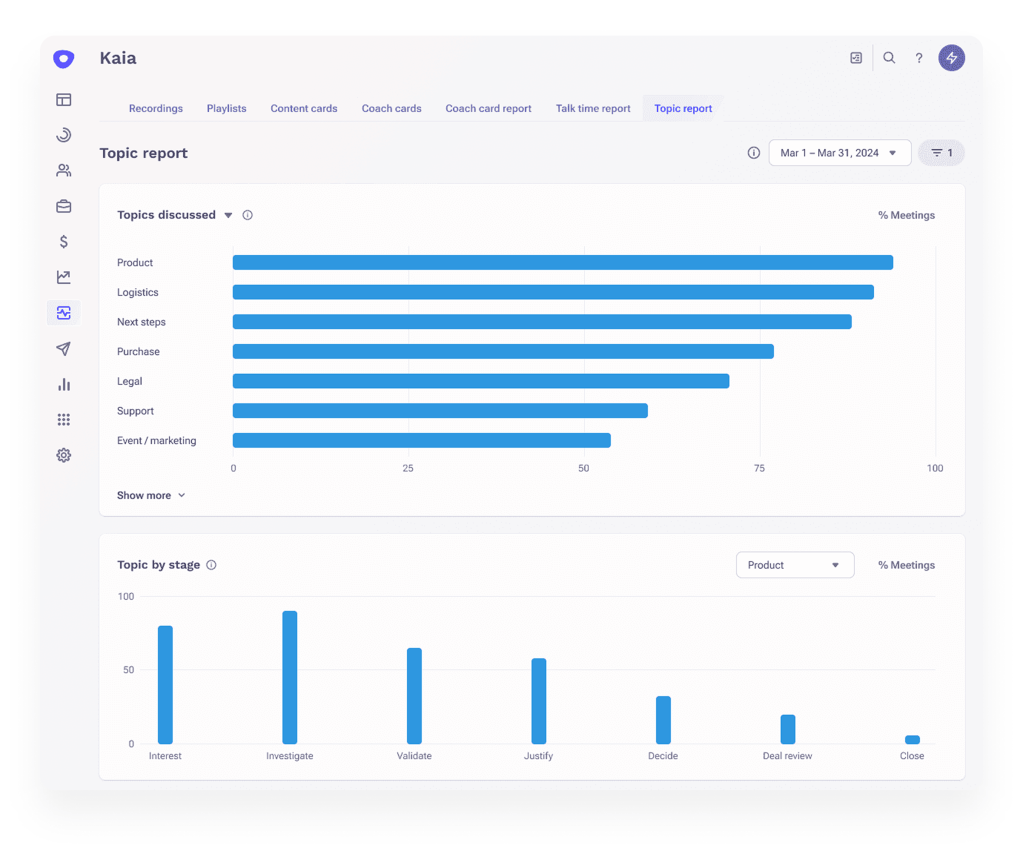
One of AI coaching’s greatest advantages is its ability to create hyper-personalized learning journeys for each rep, using data-driven analysis and advanced modelling to tailor coaching at both micro and macro levels.
- Behaviour-based learning paths: AI systems ingest historical call data, analyse language patterns, pacing, structure, and interaction styles from top performers, and use clustering algorithms to group similar rep profiles. Based on these patterns, they generate targeted micro-learning modules or scenario-based simulations to address individual skill gaps [12].
- Faster onboarding: According to SalesHacker, personalized coaching can cut ramp-up time by 40% [13]. This is achieved through adaptive learning platforms where AI tracks a new hire’s progress, identifies friction points via performance analytics, and recommends role-play exercises or contextual resources at the right moment.
- Ongoing skill optimization: As a rep’s performance metrics, sentiment trends, and conversation quality indicators change, reinforcement learning models and continuous evaluation pipelines update the recommendations in real time [14]. This ensures the system doesn’t just provide one-time advice but evolves alongside the rep.
- Personalized coaching journeys: Fine-tuned AI models, trained on industry-specific terminology, regulatory requirements, and sales methodologies, allow the system to tailor not only what content is delivered but also how it’s delivered, choosing between video breakdowns, interactive quizzes, or real-time nudges depending on a rep’s preferred learning style and engagement history.
According to Eubrics, organizations using behaviour-tailored AI coaching saw a 30% increase in close rates and a 40% reduction in onboarding time [15].
The feedback loop: learning, improving, and repeating
Source: https://fastercapital.co
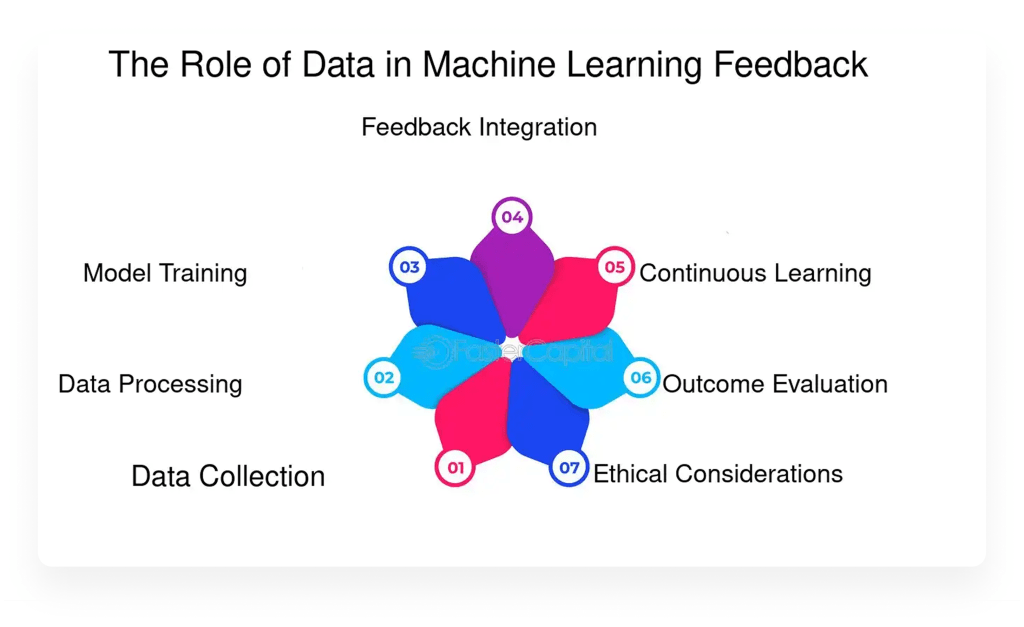
AI coaching thrives on an iterative loop that continually refines its recommendations, supported by robust evaluation metrics, technical processes, and advanced performance measurement techniques.
- Data capture: The system collects transcript, sentiment, behavioural, and contextual CRM data after each call, using automated logging, feature extraction pipelines, and secure storage for downstream processing [1]. This involves speech-to-text outputs, entity recognition metadata, sentiment polarity scores, and engagement metrics, all indexed for retrieval and model training.
- Outcome comparison: Predicted success metrics are compared to actual deal results using statistical evaluation methods such as regression error analysis and classification performance tracking [1].
- Model refinement: Algorithms are updated based on what tactics proved effective, using supervised retraining, hyperparameter tuning, and feature selection driven by evaluation metrics like recall, precision, and F1 scores [1].
- Real-time adaptation: Fresh data feeds back into the system to enhance in-the-moment guidance, with streaming pipelines enabling low-latency inference updates [12].
- Evaluation and feedback integration: Structured evals assess how well the AI’s recommendations align with business KPIs, leveraging confusion matrices, A/B testing, and longitudinal performance tracking. This ensures the AI is not just learning from raw data, but actively improving based on measurable business impact.
According to Outscale.ai, organizations see measurable improvements in call quality and deal closures within 30–60 days of implementing AI coaching [16].
Future outlook: where AI coaching is headed
AI coaching will expand beyond sales into customer success, account management, and other roles, with the biggest leap being real-time AI coaching, where systems like Outscale.ai analyse and guide conversations as they happen. This enables instant, context-aware guidance that turns insight into action within milliseconds.
Key benefits over post-call analysis include instant strategy adjustment using live sentiment and CRM context, better learning retention from in-the-moment guidance, consistent coaching quality without a manager present, and faster skill growth through immediate feedback.
Enabling technologies include low-latency speech-to-text, edge inference for minimal delay and privacy, streaming NLP pipelines updating every few hundred milliseconds, predictive analytics for timely nudges, and reinforcement learning that adapts recommendations live.
Future possibilities include VR/AR for immersive role-play and predictive models that anticipate performance weeks ahead. Real-time AI coaching will rely on low-latency architectures, fine-tuned industry models, and continuous updates, giving early adopters a lasting competitive edge.
Conclusion
AI coaching represents a transformative leap in how sales organizations develop talent. By blending AI’s analytical capabilities with human coaching expertise, companies can scale personalized guidance, shorten ramp times, and improve outcomes across the board. The intelligent feedback loop ensures every interaction becomes a learning moment, driving measurable and continuous growth.
Sources:
[1] https://www.ibm.com/topics/large-language-models
[2] https://www.gong.io/blog/real-time-sales-coaching/
[3] https://www.globenewswire.com/news-release/2023/04/12/2645343/0/en/AI-in-Sales-Market-Size-to-Reach-USD-13-46-Billion-by-2030.html
[4] https://www.salesforce.com/blog/ai-sales-statistics/
[5] https://www.gong.io/blog/conversation-intelligence/
[6] https://cloud.google.com/speech-to-text/docs
[8] https://www.gartner.com/en/sales/topics/ai-sales
[9] https://bts.com/insights/ai-in-sales-case-study
[10] https://www.gartner.com/en/documents/AI-driven-sales-coaching
[12] https://www.salesforce.com/blog/real-time-ai-sales-tools/
[13] https://www.saleshacker.com/personalized-sales-coaching/
[14] https://www.microsoft.com/en-us/research/blog/personalized-ai-learning/
[15] https://eubrics.com/ai-coaching-results
[16] https://outscale.ai/blog/ai-coaching-impact
 Outscale.ai