
Table of contents
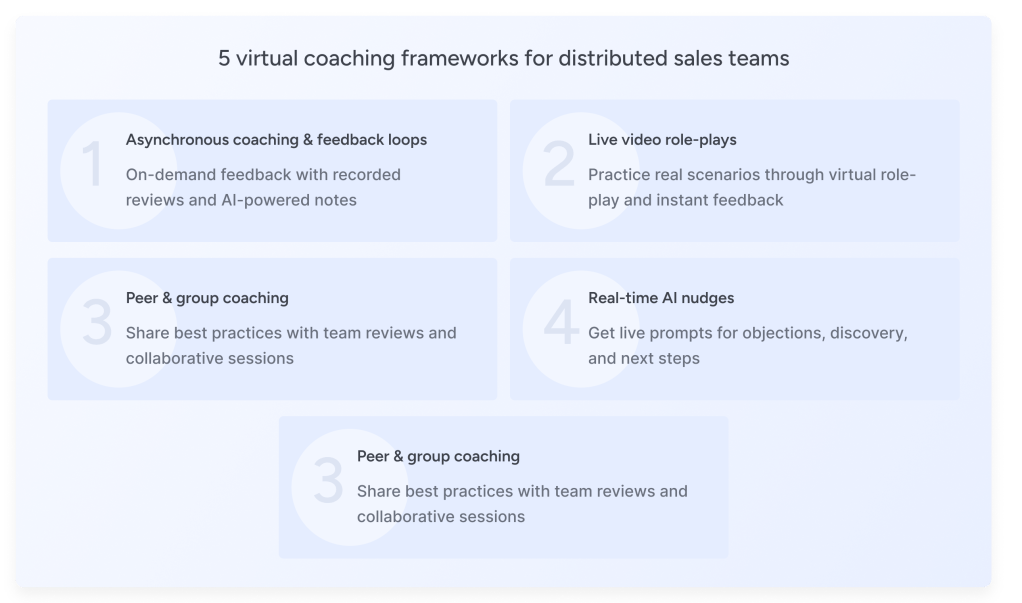
- 5 virtual coaching frameworks for distributed sales teams
- The unique challenges of coaching distributed sales teams
- Asynchronous coaching and feedback loops
- Live video review and role-play frameworks
- Peer-to-peer and group coaching models online
- Real-time AI lead coaching nudges
- Scaling virtual coaching with AI and digital tools
- The takeaway
5 virtual coaching frameworks for distributed sales teams
Source: https://outscale.ai/
The landscape of sales has undergone a seismic shift. For sales leaders, managers, and revenue operations professionals, the traditional playbook of in-office, over-the-shoulder coaching is no longer a viable strategy. With the majority of sales teams now operating in a hybrid or fully distributed model, the challenge is clear: how do you effectively coach a team you can’t see every day?
While the shift to remote work has its benefits, with some studies suggesting a 13% increase in productivity for remote teams, it also introduces significant hurdles for leadership [1]. The informal osmosis of knowledge, the quick huddles after a call, and the instant, in-person feedback sessions have all but disappeared. This new reality demands a new approach to coaching, one that is intentional, scalable, and tailored to the unique dynamics of the virtual world.
This article will explore five proven virtual coaching frameworks designed to equip sales managers with the tools to build a high-performing distributed team. From leveraging technology to fostering peer collaboration, we will show you how to maintain engagement, drive performance, and scale your coaching efforts in the modern sales environment.
The unique challenges of coaching distributed sales teams
The move to remote work was accelerated by necessity, but the trend has become permanent for many organizations. Approximately 71% of SaaS sales teams now work remotely, a dramatic increase from pre-pandemic levels [2]. While this offers flexibility, it has also created new challenges for managers. A striking 67% of sales managers report that leading remote or hybrid teams is a major challenge [3].
The biggest hurdle is the loss of casual interaction. In an office, knowledge spreads organically through overheard conversations and spontaneous collaboration. As one expert notes, this informal “osmosis” of knowledge is largely absent in remote settings [4]. This can leave new hires feeling disconnected and seasoned reps isolated, as a significant number of remote workers report feeling lonely [5].
Furthermore, coaching a team from a distance makes it difficult to assess critical soft skills. A manager cannot easily observe a rep’s body language, their confidence in a difficult conversation, or their resilience after a tough rejection [6]. Without this crucial context, coaching can become less effective and more reliant on quantitative metrics alone. To overcome this, sales coaching must become more structured and goal-oriented. As one expert insight highlights, a lack of structure can turn coaching into a “nice-to-have” rather than an essential driver of performance [7]. It is clear that adapting to this new environment is not just a preference, but a necessity, especially given that 72% of coaching clients now prefer remote or hybrid sessions [8].
Asynchronous coaching and feedback loops
Asynchronous coaching is a powerful framework that leverages technology to provide feedback without the need for real-time meetings. Instead of scheduling a live call, a manager can review a rep’s work, such as a recorded call or a pitch deck, and provide detailed feedback at a time that works for them. The rep can then consume this feedback on their own schedule, reducing the pressure of meeting overload.
This approach is highly effective for distributed teams because it eliminates scheduling conflicts across different time zones. It also helps managers avoid the “time-tax” of constant live meetings, freeing them up to focus on higher-level strategic tasks [9].
A popular method for implementing asynchronous coaching is the ‘PAUSE’ framework [10]:
- P – prepare: The manager reviews call recordings or other artifacts before providing feedback.
- A – analyze: The manager identifies patterns, both positive and negative, in the rep’s performance.
- U – understand: The manager determines the “why” behind the rep’s actions or tactics.
- S – strategize: The manager plans a clear, actionable feedback path.
- E – execute: The manager delivers the feedback via video, audio notes, or written comments.
The flexibility of asynchronous communication benefits reps, too. It allows them to engage with feedback when they are ready to process it, leading to more thoughtful responses and a higher quality of engagement [11]. This approach also creates a searchable, persistent record of coaching feedback, which helps keep distributed teams aligned and on the same page without live meetings [12]. To support these efforts, 90% of organizations now use a Learning Management System (LMS) to deliver on-demand training, and 21% have introduced flexible, self-paced learning schedules to support their distributed teams [4].
Live video review and role-play frameworks
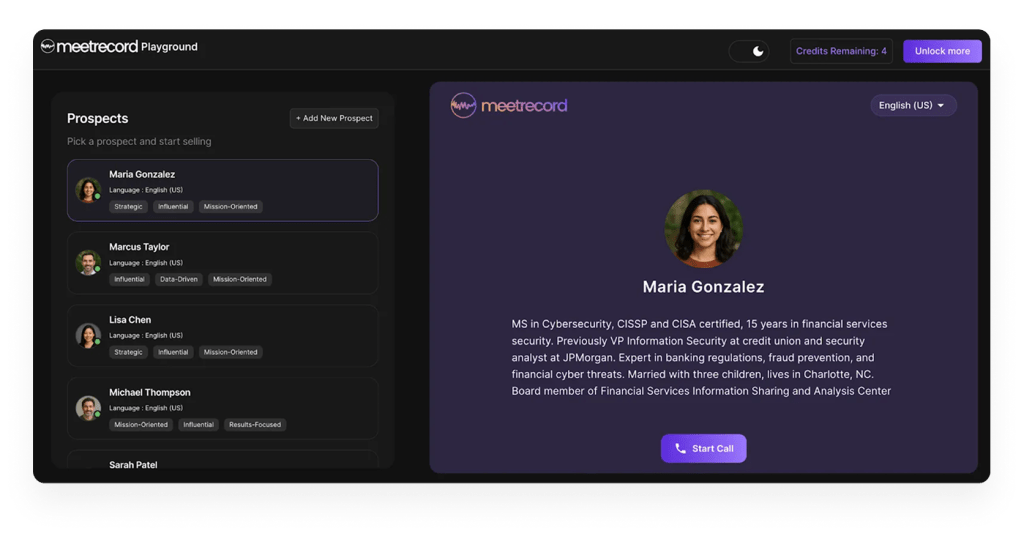
While asynchronous coaching provides flexibility, live, real-time interaction remains crucial for developing a sales rep’s muscle memory. This is where virtual role-play and live video reviews become invaluable. These sessions are designed to simulate real-world scenarios and provide immediate, constructive feedback.
The return on investment for live video coaching is substantial. Sales reps who train via live video role-play have seen approximately 41% higher close rates and a 29% increase in buyer satisfaction [13]. Even more compelling, reps who receive weekly coaching achieve about 25% higher quota attainment and close 30% more deals [14]. This highlights the importance of consistent, structured coaching.
An effective framework for live video role-play should be:
- Purpose-driven: Each session should have a clear learning objective, such as mastering a new pitch or handling a specific objection.
- Detailed: The feedback should be specific, not general. Managers should focus on one or two key areas for improvement, rather than overwhelming the rep with a long list of critiques [4].
- Scenario-based: The scenarios should be complex and dynamic, allowing for unscripted conversation pathways that go beyond simple question-and-answer sessions [15].
For a truly immersive experience, many companies are turning to advanced virtual training solutions. Immersive AI and virtual reality simulations dramatically accelerate the learning process, with participants reporting being 275% more confident and learning four times faster than in traditional classroom training [16]. This type of technology can replicate the pressure of a real sales call, providing a safe space for reps to practice and refine their skills.
Peer-to-peer and group coaching models online
In a distributed environment, the manager is not the only source of knowledge. Peer-to-peer and group coaching models are powerful frameworks for fostering collaboration and shared learning within a team. These models leverage the collective expertise of the team, creating a culture of support and continuous improvement.
One of the most effective tactics is the virtual ‘buddy system,’ where experienced reps are paired with new hires for ongoing support and coaching [17]. This not only helps with onboarding but also builds stronger relationships within the team. For more structured learning, managers can organize virtual ‘breakout’ sessions where small groups practice skills and provide feedback to each other [1].
Another innovative approach is the creation of a ‘peer learning library.’ Reps can submit recordings of their most successful sales calls, which are then shared with the team in an asynchronous format for everyone to learn from [18]. This type of social learning is becoming increasingly common, with 55% of companies now using platforms for peer-to-peer collaboration [19]. The results speak for themselves, as reps who engage in peer coaching are on average 8% more engaged than those who do not [20].
However, for group coaching to succeed in a virtual setting, it must be supported by a culture of psychological safety [21]. Teams must feel comfortable admitting mistakes, asking for help, and sharing what they have learned from failures. Real-world examples, like Microsoft’s use of its Teams platform to foster collaborative learning, prove that this approach is a key driver for increasing engagement and shared knowledge across departments [22].
Real-time AI lead coaching nudges
Source: https://outscale.ai/
The ultimate challenge for a sales leader is not just coaching a team, but doing so at scale. As teams grow and the volume of sales data explodes, it becomes impossible for a single manager to provide personalized coaching to every rep on every call. This is where AI and digital tools become indispensable.
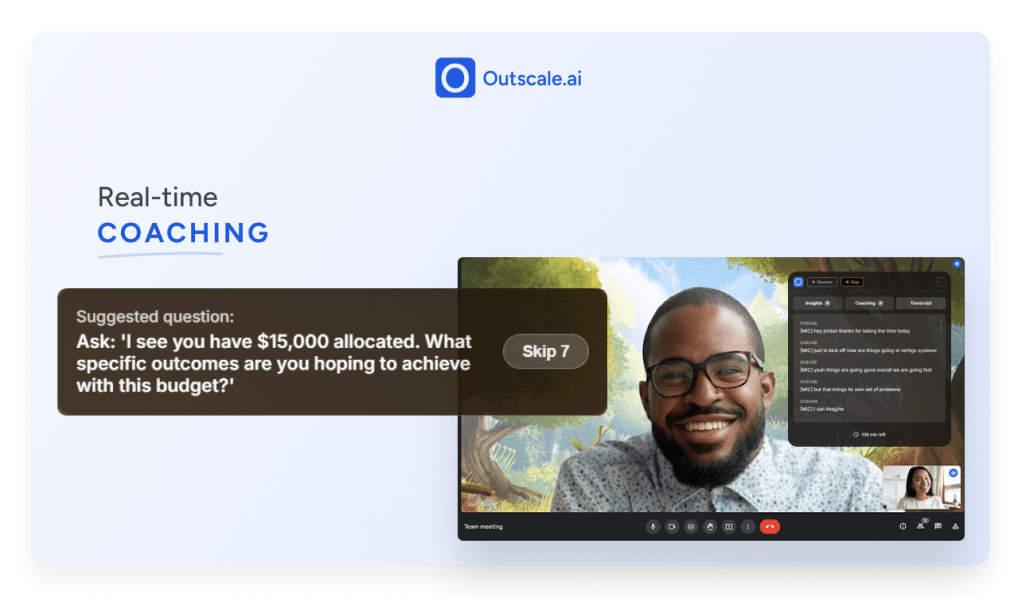
This is where real-time AI coaching nudges come in, providing a transformative layer of support that goes beyond post-call analysis. Instead of waiting for a weekly review, sales reps receive instant, actionable guidance directly on their screens while they are on a live call. This immediate feedback helps them adjust their approach on the fly, ensuring they never miss a critical coaching opportunity.
Systems like Outscale.ai are at the forefront of this technology [23]. They work by constantly analyzing an organization’s sales interactions. By learning from thousands of past successful calls and deals, the AI maintains a dynamic and updated playbook of what’s working and what’s not for a specific company and its prospects. During a live call, the AI listens for key phrases, customer sentiment, and conversation dynamics. If a rep is struggling with an objection, the AI can instantly provide a relevant talking point or a link to a successful case study. If a rep is talking too much, a gentle on-screen nudge can remind them to ask more questions and listen.
The benefits of this real-time approach are significant:
- Accelerated learning: New hires can get up to speed much faster, as they are guided through best practices in the moment, shortening the ramp-up time for new reps [24].
- Consistent performance: The AI ensures that every rep, regardless of their experience level, has access to the collective knowledge of the team, leading to more consistent performance and higher success rates.
- Reduced managerial overhead: Managers can spend less time on basic, reactive coaching and more time on strategic activities, high-stakes deals, and complex role-playing scenarios.
- Data-driven insights: The AI continuously logs which nudges are most effective, providing managers with a treasure trove of data to inform their long-term coaching strategies and refine the company playbook.
By embedding coaching directly into the workflow, real-time AI nudges ensure that every sales call becomes a productive learning opportunity.
Scaling virtual coaching with AI and digital tools
AI and digital tools provide an objective, data-driven layer to coaching that complements a manager’s human intuition. AI-powered coaching can identify skill gaps that a human manager might miss, especially when managing a large team [25].
Consider the impact of Conversation Intelligence (CI) platforms. These tools analyze every sales conversation, providing actionable insights into what is working and what is not. The results are powerful:
- Organizations using CI tools have seen a 50% increase in win rates on deals where reps completed AI-recommended tasks [26].
- AI-guided deals, which receive automated feedback and next steps, have a 35% higher win rate than deals without AI assistance [26].
- Investment in generative AI for sales has yielded an average ROI of 3.7 times, with top performers approaching 10 times [27].
Beyond conversation analysis, AI can automate low-value tasks like lead scoring and initial outreach, boosting lead volume by up to 50% [28]. This allows reps to focus on high-value conversations, making their time more productive. Furthermore, the use of digital sales rooms centralizes communication, content, and analytics, leading to a 25% increase in sales productivity [25].
Ultimately, AI integration leads to better results across the board. 83% of teams using AI reported year-over-year revenue growth, compared to only 66% of teams without AI [27]. It is clear that technology is not just an add-on but a fundamental part of the modern virtual coaching framework.
The takeaway
The shift to a distributed sales team model has permanently altered the way we coach, but it has also created an opportunity for more scalable and effective approaches. The old ways of coaching are no longer enough. Sales leaders must evolve their strategies to meet the unique challenges of a remote environment.
By adopting a combination of asynchronous and live coaching frameworks, fostering a culture of peer-to-peer learning, and leveraging the power of AI and digital tools, you can build a high-performing distributed team that is more engaged, more productive, and more successful than ever before. This is not about choosing one framework over another, but about creating a holistic coaching ecosystem that supports your team at every stage of their professional journey.
Sources:
[1] https://www.mckinsey.com/capabilities/operations/our-insights/the-next-normal-in-work

[2] https://surfe.com/blog/how-to-manage-remote-sales-team

[3]  https://kapable.club/blog/statistics/sales-leadership-statistics

[4] https://thesalescollective.com/sales-training-statistics-usa

[5] https://www.ringover.com/blog/loneliness-at-work-survey

[6] https://www.activatedscale.com/blog/overcoming-hiring-remote-sales-talent-challenges

[7] https://www.kornferry.com/insights/featured-topics/sales-transformation/5-steps-to-a-powerful-sales-coaching-program

[8] https://entrepreneurshq.com/coaching-industry-statistics/

[9] https://televerde.com/blog/coaching-sales-teams-for-remote-work

[10] https://challengerinc.com/blog/challenger-sales-coaching-framework/

[11] https://lattice.com/library/asynchronous-feedback

[12] https://www.gong.io/blog/sales-coaching-framework/

[13] https://www.gong.io/blog/sales-coaching-statistics/

[14] https://www.salesforce.com/blog/sales-coaching-best-practices/

[15] https://www.mindtickle.com/blog/why-real-time-role-play-is-critical-for-sales-teams

[16] https://www.pwc.com/us/en/services/consulting/technology/emerging-technology/virtual-reality-training-report.html

[17] https://challengerinc.com/blog/remote-sales-coaching/

[18] https://www.gong.io/blog/peer-coaching-sales-teams/

[19] https://www.gartner.com/en/articles/reimagine-your-sales-enablement-strategy-for-the-digital-age

[20] https://www.gallup.com/workplace/215712/boost-employee-engagement-team-coaching.aspx

[21] https://www.forbes.com/sites/forbescoachescouncil/2021/04/21/how-psychological-safety-can-improve-team-coaching-and-performance/%3Fsh%3D6f53a6e355c7

[22] https://www.microsoft.com/en-us/microsoft-365/blog/2021/03/09/from-productivity-to-performance-how-microsoft-teams-can-power-your-sales-organization/

[23] https://outscale.ai

[24] https://www.mckinsey.com/business-functions/mckinsey-digital/our-insights/the-untapped-power-of-digital-nudges

[25] https://www.forrester.com/report/The-Forrester-Wave-Sales-Engagement-Q3-2021/RES176466

[26] https://www.gong.io/blog/ai-sales-stats/

[27] https://www.mckinsey.com/capabilities/growth-marketing-and-sales/our-insights/the-future-of-sales-with-ai

[28] https://www.hubspot.com/sales/ai-in-sales